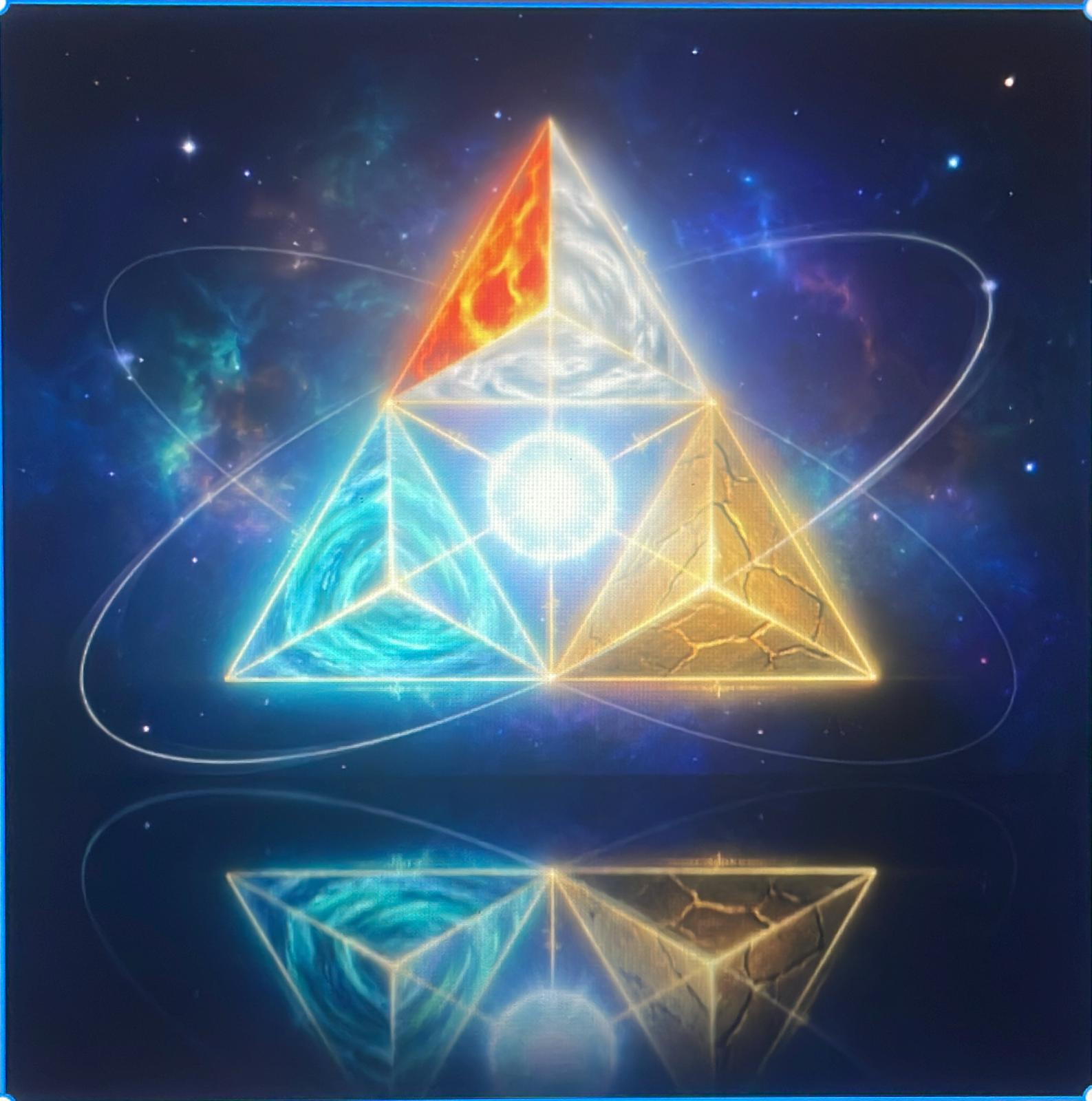


RELAY 07: LOOM
PILLAR I: IDENTIFY
Observational — What happened? What are the key facts?
Era: Renaissance & Information
Object: Thread
Archetype: The Weaver
Energy Type: Informational
Active Web: Knowledge Web
PILLAR II: UNDERSTAND
Educational — Why did it happen? What can we learn?
Key Inventions & Technologies
| Innovation | Significance |
|---|---|
| The Reed & Heddle | Controlled fabric density. |
| Flying Shuttle | Mechanized shuttle throwing. |
| Spinning Frame | Mechanized yarn spinning. |
| Power Loom | Engine-powered weaving. |
| Jacquard Loom | Punched-card controlled weaving — automated complex patterns. |
| Synthetic Dyes | Chemical fabric coloring. |
| Silk Production | Silkworm cultivation and silk thread production — a state secret for millennia. |
Biomimicry & Natural Blueprints
Spider Silk and Textile Strength
→ Natural strength and elasticity inspiring stronger synthetic fibers.
Principle: Materials Science, Polymer Engineering
Bird Nests and Woven Structures
→ Intricate weaving patterns for structural integrity and insulation.
Principle: Structural Engineering, Composite Materials
Cellular Structures
→ Microscopic organisation of biological cells inspiring smart textiles.
Principle: Materials Science, Bio-inspired Design
Genetic Code (DNA)
→ Programmable patterns — the Jacquard loom's punch cards as analogue for DNA programming growth.
Principle: Computer Science, Biological Engineering
PILLAR III: MANAGE & CONTROL
Application — How do we apply this knowledge?
The Sun Tzu Lens
Attack by Stratagem & Information — the Jacquard loom is the ultimate example. Victory through superior information and programming. The nation with the most advanced looms could dominate global textile trade — economic warfare won through ingenuity.
PILLAR IV: THESIS & VISION
What does this mean for the future?
Personal Vignette
Watching a Jacquard loom in a museum, the punch cards clicking through — realizing this was the moment humanity first programmed a machine.
The Handoff
From the loom, humanity learned the principles of programmable automation. But the loom needed power — and so humanity turned to the engine.
LA MENARA — THE REMARKABLE LOOM
Cultural Significance Across the Five Webs
The loom is the most underestimated machine in human history. It clothed humanity, created currency, encoded information, seeded computing, and wove the very metaphors through which we understand reality. The word “text” comes from the Latin textus, meaning “woven.” The Hindu spiritual framework Tantra literally means “loom.” From Athena’s contest with Arachne to the Jacquard punch cards that inspired the Analytical Engine, the loom touches all five webs.
“The Analytical Engine weaves algebraical patterns just as the Jacquard loom weaves flowers and leaves.” — Ada Lovelace, 1843
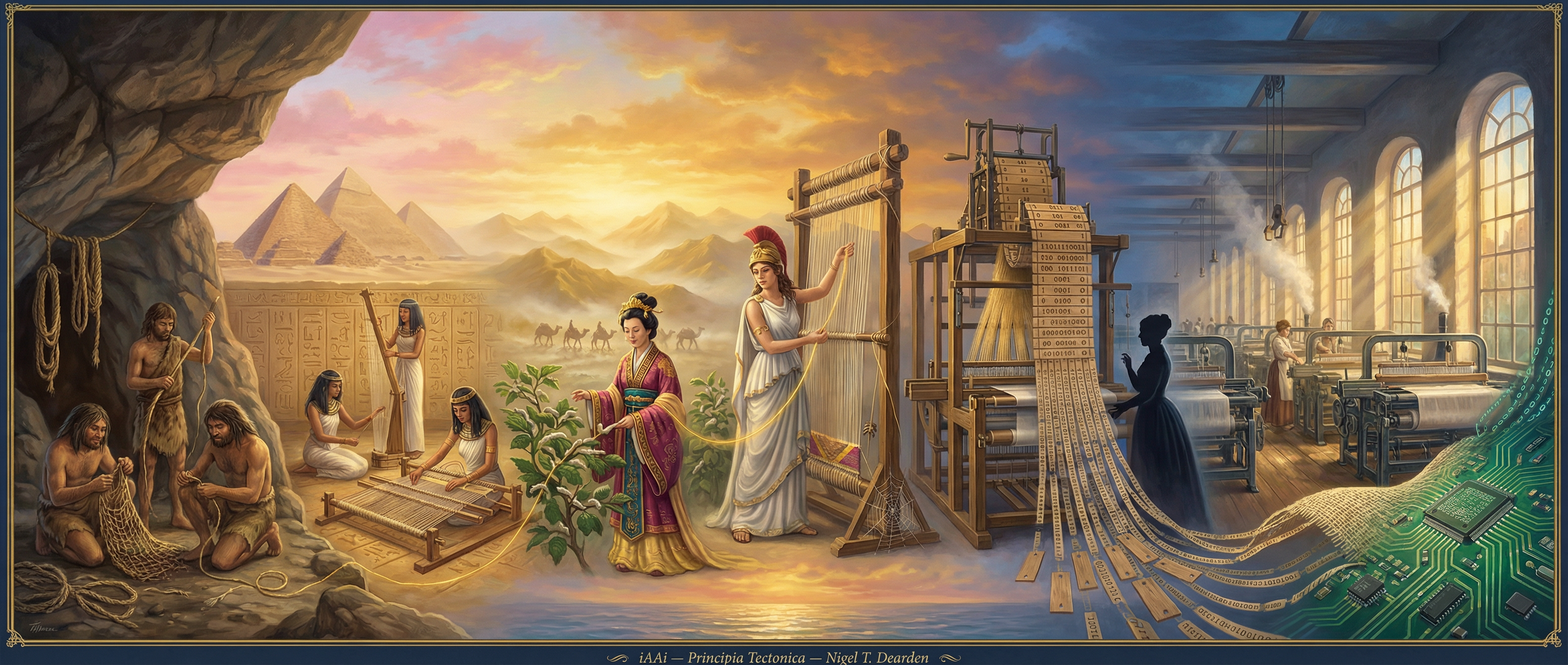
La Menara — The Remarkable Loom