INFRASTRUCTURE ACADEMY BETA
Infrastructure • Infostructure • The Academy of Both

An Infrastructure Odyssey: Episode 1 - Calories to Consciousness
A Civil Engineer's Perspective and Guide — An Infrastructure Odyssey: From Calories to Consciousness
"The Earth is the cradle of humanity, but mankind cannot stay in the cradle forever." — Konstantin Tsiolkovsky
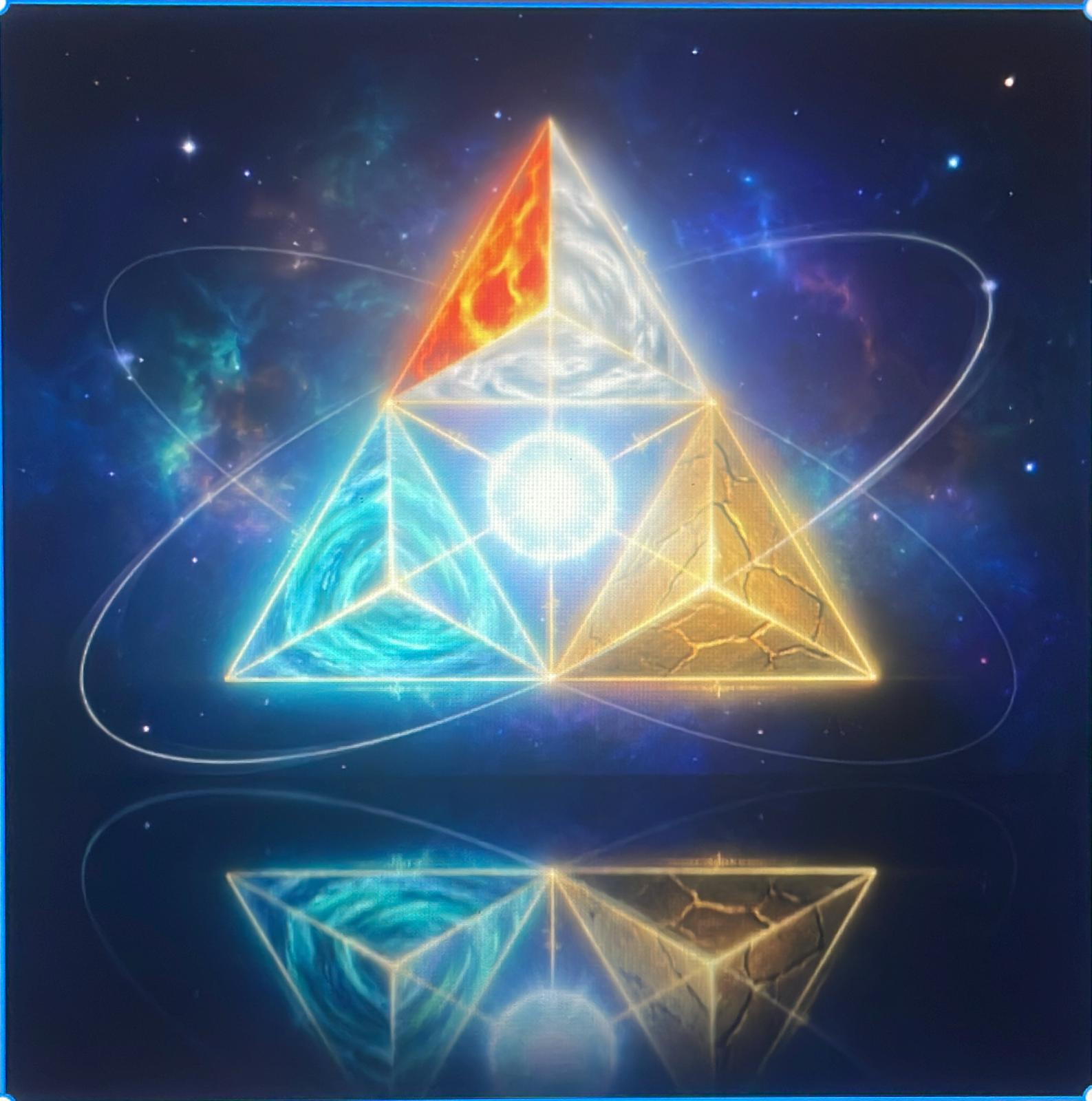
Earth itself is the original infrastructure — a planetary engine powered by nuclear fusion at its core and solar radiation from above. Before humanity built anything, the planet had already engineered its own systems: tectonic plates shifting continents, ocean currents distributing heat, atmospheric cycles regulating climate, and magnetic fields shielding life from cosmic radiation. This is the cosmic substrate from which all infrastructure emerges — the foundation beneath the foundation.
Before fire, before tools, the Earth itself was already burning. At its core, nuclear fusion drives tectonics, mountains, rift valleys, and volcanoes. Its magnetic field shields life from solar winds — a planetary umbrella that makes life possible. This is the primal surplus: energy transformed from cosmic origins into terrestrial abundance. Fire at the core forges the crust; tree bioreactors form the atmosphere; water cycles enable agriculture. The stage on which all relays are performed.
Civil engineers inherit this planetary relay — a drive to harness elemental forces for the benefit of mankind. The odyssey begins not with human intent, but with the planet's own ignition, the substrate upon which every subsequent relay is built. The planet is the substrate — all infrastructure begins with Earth's own systems.
The Planetary Engine frames the entire odyssey. Every relay that follows — from Fire to Human Nodes — is humanity learning to read, harness, and extend the systems that Earth already runs. Infrastructure is not invented; it is discovered, copied, and scaled from planetary blueprints that have operated for 4.5 billion years. Unless we destroy it completely, it is always there — the permanent backdrop, always present.
Before the first tool, before the first word, there was Fire. Not merely the random lightning strike or the volcanic eruption, but Fire tamed, contained, and wielded by nascent humanity. This was the primordial spark of intent, the initial act of the Master Builder and the Master Weaver, a foundational relay in the grand Civilisational Relay that would stretch from the primal forest to the farthest reaches of the cosmos.
Fire was the original force multiplier. It transformed raw calories into cooked sustenance, making food digestible, expanding our diet, and fueling the growth of larger, more complex brains. It offered warmth against the cold, light against the darkness, and protection against predators, creating the first sanctuaries of safety and community. This mastery of fire was not just a technological leap; it was a cognitive revolution, demanding foresight, planning, and the collective effort to maintain its precious flame.
In its flickering dance, fire was the first invisible infrastructure. It enabled the crafting of tools, the hardening of spear tips, and the shaping of clay, laying the groundwork for all subsequent material technologies. It was the first medium for social gathering, around which stories were told, knowledge was shared, and the bonds of community were forged. The hearth became the original node in a nascent network of human connection, a silent teacher of shared experience and collective memory.
This Prologue of Fire sets the stage for the epic journey of From Calories to Consciousness: A Civil Engineer's Perspective and Guide — An Infrastructure Odyssey. It reminds us that every grand infrastructure, every complex system, every leap of human ingenuity, begins with a fundamental act of harnessing energy and applying intent. The control of fire was humanity's first conscious step on the C2C journey, a primal declaration of our capacity to shape our environment, to transcend our biological limitations, and to begin the long, arduous, and ultimately triumphant Civilisational Relay towards a future we are still building.
From the ignition of intent came the anchoring of place. Calories became surplus, and villages rose from the soil. Humanity shifted from wandering bands to fixed societies, while outriders remained as mobile counterpoints — two modes of continuity, each vital to the civilisational weave. Irrigation channels carved permanence into the land, granaries stored the surplus of survival, and walls defined the first boundaries of order. Infrastructure was no longer improvised; it became deliberate, engineered into permanence. In this relay, mankind learned that stability itself could be designed — the foundation stone upon which higher consciousness would one day rise.
From surplus came movement, and from movement came connection. Trade webs stretched across continents, binding distant peoples into a single fabric. Steppe outriders became the bridges between East and West, carrying goods, ideas, and intent across vast horizons. Roads carved through wilderness, caravans crossed deserts, and ships traced the edges of oceans — each route an artery of civilisation. Infrastructure was no longer local; it became global, weaving cultures into shared continuity. In this relay, mankind discovered that exchange itself was a form of infrastructure — a network of possibility, carrying not only wealth but the seeds of higher consciousness beyond the limits of ego and isolation.
From networks of exchange rose the skeletons of power. Three great empires — West, East, and the in-between — expanded, consolidated, and collapsed in cycles of continuity. Cities became hubs of permanence, aqueducts carried lifeblood across landscapes, and monumental works proclaimed dominion. Infrastructure was no longer just survival or trade; it became the architecture of authority, the engineered skeleton of civilisation itself. In this relay, mankind learned that power could be built, scaled, and immortalized in stone — yet always at risk of fracture when ego eclipsed unity. Empire was both triumph and warning, a reminder that only through conscious design could greatness endure.
Every ascent carries its shadow. Civilisations that reached their zenith — Rome, Han, Maya — fell into silence. The perennial threats struck with precision: depletion of resources, wars of ambition, plagues of disease, and the division of unity into fragments. Infrastructure that once proclaimed permanence crumbled into ruins, aqueducts dried, temples emptied, and cities became echoes. Yet collapse was never the end; it was a relay, a fracture that revealed lessons etched in stone. In this chapter, mankind learned that continuity demands vigilance, and that collapse itself becomes the reminder that design must be restored, renewed, and carried forward.
From ruins rose memory, and from memory came renewal. Knowledge that had been scattered or silenced was rediscovered — manuscripts preserved in monasteries, oral traditions carried by custodians, fragments of wisdom stitched back together. Seven voices across ages became guardians of continuity, ensuring that the relay did not end in collapse. The pen itself emerged as infrastructure, transmitting intelligence across generations, restoring what stone and steel could not. In this chapter, mankind learned that rediscovery is not repetition but amplification — the act of weaving lost threads into new patterns, preparing the scaffold for the next ascent.
From rediscovered wisdom came an explosion of learning. Civilisations reignited with science, art, and engineering, weaving threads of continuity into new brilliance. Windmills turned, water wheels powered, and fire was harnessed with fresh intent. Cathedrals rose as monuments of faith and design, bridges spanned rivers as triumphs of engineering, and the printing press multiplied knowledge into permanence. Infrastructure became both scaffold and symbol — a visible architecture of renewal. In this relay, mankind learned that rebirth is not a return but a leap, a renaissance that lifted civilisation toward higher consciousness through the deliberate design of beauty, logic, and learning.
From renaissance brilliance came the roar of machines. Steam hissed, coal burned, and steel forged a new skeleton for civilisation. Factories multiplied across landscapes, railways stitched continents together, and cities swelled into industrial giants. Infrastructure became mechanical, a planetary scaffold of gears, pistons, and iron rails. Industry was more than production — it was scale, the magnification of human intent into systems that reshaped the earth itself. In this relay, mankind learned that energy could be harnessed not only for survival but for dominance, and that the architecture of industry would define the modern age.
From the roar of industry came the hum of electricity and the wings of flight. Grids lit cities, telegraphs stitched continents, and aviation shrank horizons. Nations sought unity through treaties and institutions, yet the unity proved fragile — tested by wars, depressions, and rival ideologies. Infrastructure became global: airports, power stations, international organizations. Modernity was both triumph and tension, a relay where humanity glimpsed planetary scale but struggled to hold it together. In this chapter, mankind learned that unity must be engineered as carefully as machines, for without balance, the scaffold of modernity fractures.
From the power of steam and steel came three revolutions that compressed time, space, and communication. The automobile liberated movement from fixed rails, the aeroplane conquered the sky, and radio waves carried the human voice across oceans without wires. Together, the AAA Triad — Automobile, Aviation, and Airwaves — created the infrastructure of the 20th century. Highways ribboned across continents, airports became the new harbours, and broadcast towers wove an invisible web of information. Distance collapsed, borders blurred, and civilisation accelerated beyond anything the industrial age had imagined. In this relay, mankind learned that mobility, flight, and instantaneous communication were not luxuries but the essential scaffolding of the modern world.
From digital networks came the leap beyond Earth. Rockets pierced the sky, satellites orbited the planet, and telescopes gazed into the cosmos. Orbital stations circled as new cathedrals, networks of satellites became the nervous system of civilisation, and humanity saw itself from above — a single planet suspended in darkness. Yet space carried risks: militarization, neglect of Earth, and the temptation to escape rather than steward. Infrastructure transcended terrestrial limits, but consciousness had to expand with it. In this relay, mankind learned that orbital perspective is not escape, but responsibility — the recognition that Earth itself is the first spacecraft.
The odyssey culminates in the human node — a hybrid of biology, cybernetics, and digital intelligence. Genetic editing, neural augmentation, robotics, and AI converge into a new infrastructure of mind and body. Humanity becomes both designer and designed, weaving itself into the civilisational scaffold. This is not merely bioengineering of self, but the marriage of augmentation and intelligence, the conscious construction of capability. In this relay, mankind learns that the greatest infrastructure is the human node itself — programmable, extendable, and responsible for carrying the baton of civilisation into higher awareness.
The Torus serves as the unifying framework for understanding the Civilisational Relay. It illustrates how the twelve relays form an Infinite Loop of interconnected flows of energy, information, and matter. This continuous, self-organizing system fosters feedback, resilience, and self-organisation, culminating in the Resonance of the Master Weaver—a state where humanity consciously participates in its own evolution.
The Resonance of the Master Weaver embodies a powerful Philosophical Cadence of integration, purpose, and the infinite loop. It teaches us that our ultimate goal is to create a civilisation that is in harmony with itself and with the universe, a system that continuously renews and evolves. It reminds us that the journey of progress is not linear but cyclical, a perpetual dance of creation and transformation.
The journey from Tree to Torus is thus a journey from primal necessity to conscious co-creation, a testament to the enduring human Intent to build, connect, and transcend.
This work posits that human civilisation can be understood as a continuous Civilisational Relay, a series of interconnected infrastructural advancements, each building upon its predecessor, driving humanity from a state primarily concerned with Calories (basic survival and energy acquisition) towards an increasingly complex and integrated state of Consciousness (self-awareness, collective intelligence, and intentional evolution).
Each major infrastructural leap—from the primal Tree providing shelter and sustenance, to the flowing River enabling settlement and trade, the mobile Horse expanding reach, the enduring Roads connecting empires, the vast Ships navigating oceans, the rhythmic Rail unifying continents, the programmable Loom foreshadowing computation, the powerful Engine harnessing energy, the convergent AAA Triad (Automobile, Aviation & Airwaves) shrinking the world, the celestial Orbit extending our gaze, and the emergent Human Nodes engineering consciousness—represents a distinct relay in this grand journey.
These relays are not merely technological advancements; they are profound shifts in humanity's relationship with its environment, its tools, and ultimately, itself. The overarching metaphor of the Torus illustrates how these relays form an Infinite Loop of interconnected flows of energy, information, and matter. This continuous, self-organizing system fosters feedback, resilience, and self-organisation, culminating in the Resonance of the Master Weaver.

The Complete Framework — Three Modes, 5 Webs, 4 Pillars, 12 Relays

The Three Modes — West, East, and Outrider across 12,000 years

An Infrastructure Odyssey: Calories to Consciousness
I have observed the patterns of history through the lens of a civil engineer. Three modes of civilisation emerge: the West (discontinuous, built — permanent works that decay and must be rebuilt by successor civilisations), the East (continuous, built — permanent works maintained without interruption for 12,000 years), and the Outrider (semi-continuous, temporary works — tented shelters, portable camps, erected and dismantled by design. Man and horse in perfect symbiosis. Conquered most, controlled trade routes, culture endures to this day).
China is the counterpart because it sustained and endured. It reflects back at the West and asks: you built the same things we did, but you let them decay. We maintained ours. The Outrider, bridging both, mastered temporary works engineering — the discipline that underpins ALL construction. Even permanent works need temporary works to initially form. The Outrider chose never to proceed to the permanent stage, because their goals did not require it.
This is not a prediction. This is an observation of patterns that have repeated for millennia. This is a documentation of the forces that shape civilisation, told through the infrastructure they left behind — or chose to keep temporary.
And I have the pen. I will use it to shape the narrative. I will use it to position humanity for the future that is being built right now.
I have told my story. Now the world must decide what to do with it.
“Civilisation stands on the shoulders of trust professions, but it is distracted by belief professions. La Menara restores the sightline to the foundations.”
A person living on the 20th floor of a high-rise building cannot sleep unless they trust that the structure will stand. That trust is not abstract — it rests on rebar, shear walls, wind load paths, settlement tolerances, and a civil engineer’s signature. No one applauds when the building stands. No one notices when the bridge carries its fifty-millionth vehicle. No one celebrates when the water flows, the sewage disappears, or the airport functions. Civil engineering is the only profession where success means nothing happens.
Finance operates under a different condition entirely. Markets move because people believe they should. Currencies hold value because people agree they do. Brands rise because narratives rise. A mispriced asset hurts investors. A misdesigned structure kills families. This asymmetry — between consequence that kills and consequence that disappoints — is the moral core of the Infrastructure Odyssey.
Engineers, Doctors, Pilots, Architects, Builders
Judged by physics, not opinion. They deal in load paths, failure modes, tolerances, safety factors, consequences, and stewardship. Their work is invisible because it is stable. When a structure stands for 100 years, the engineer disappears into the background of civilisation. The more essential the profession, the more invisible it becomes.
Finance, Markets, Media, Politics, Branding
Judged by sentiment, confidence, narrative, perception, and momentum. Their work is visible because it is performative. Finance is in the headlines because it trades in motion, not endurance. If they are wrong, the story collapses — not the world.
Every relay in the Infrastructure Odyssey — from Fire to Human Nodes — is a trust-layer artefact. Finance cannot exist without roads. Markets cannot exist without ships. Digital currency cannot exist without the Engine relay. The relay sequence is the trust sequence. The belief layer only emerges after the trust layer is established. Civilisation fails when belief professions outrun trust professions. The 2008 financial crisis, the dot-com collapse, every speculative bubble in history — these are moments when belief outran the structural reality beneath it.
This is why a civil engineer’s perspective matters. Engineers see the hidden structure, the long-term cost, the failure modes, the load-bearing truths, the difference between appearance and integrity. They think in decades and centuries while finance thinks in quarters, media thinks in hours, and social platforms think in seconds. Civilisation collapses when short-term thinkers dominate long-term systems.
Infrastructure Academy exists to restore the balance. It trains structural thinking, consequence awareness, long-term reasoning, system integrity, and civilisation literacy. In a world dominated by belief professions, iAAi restores the architecture of reality. Trust professions hold civilisation up. Belief professions hold civilisation’s attention. iAAi teaches the world to see the difference.