

RELAY 8: RAIL
Industry — The Empowerer
From renaissance brilliance came the roar of machines. Steam hissed, coal burned, and steel forged a new skeleton for civilisation. Factories multiplied across landscapes, railways stitched continents together, and cities swelled into industrial giants. Infrastructure became mechanical, a planetary scaffold of gears, pistons, and iron rails. Industry was more than production — it was scale, the magnification of human intent into systems that reshaped the earth itself. In this relay, mankind learned that energy could be harnessed not only for survival but for dominance, and that the architecture of industry would define the modern age.
ACTIVE WEBS
ENERGY WEB
Steam power and coal-driven transportation
EXCHANGE WEB
Industrial goods distribution networks
KNOWLEDGE WEB
Engineering and industrial science
POWER WEB
Industrial dominance and military logistics
ICUT FOUR PILLARS
INFRASTRUCTURE
Tracks, locomotives, stations, signaling, maintenance systems
CONTINUITY
Engineering standards and maintenance protocols
UNIFICATION
National rail networks and industrial organisation
THREATS
Technological obsolescence, maintenance failure, competition
HISTORICAL SIGNIFICANCE
Timeline: Approximately 1830 onwards, with rapid expansion through the 20th century.
Impact: Enabled the Industrial Revolution, transformed global trade, facilitated urbanization, and became the foundation of modern logistics. Rail networks were the first truly modern infrastructure systems.
Legacy: Modern transportation networks—highways, airlines, shipping—evolved from rail infrastructure principles. The systems thinking and standardization pioneered by railways continue to shape modern infrastructure.
LA MENARA — THE REMARKABLE RAIL
Cultural Significance Across the Five Webs
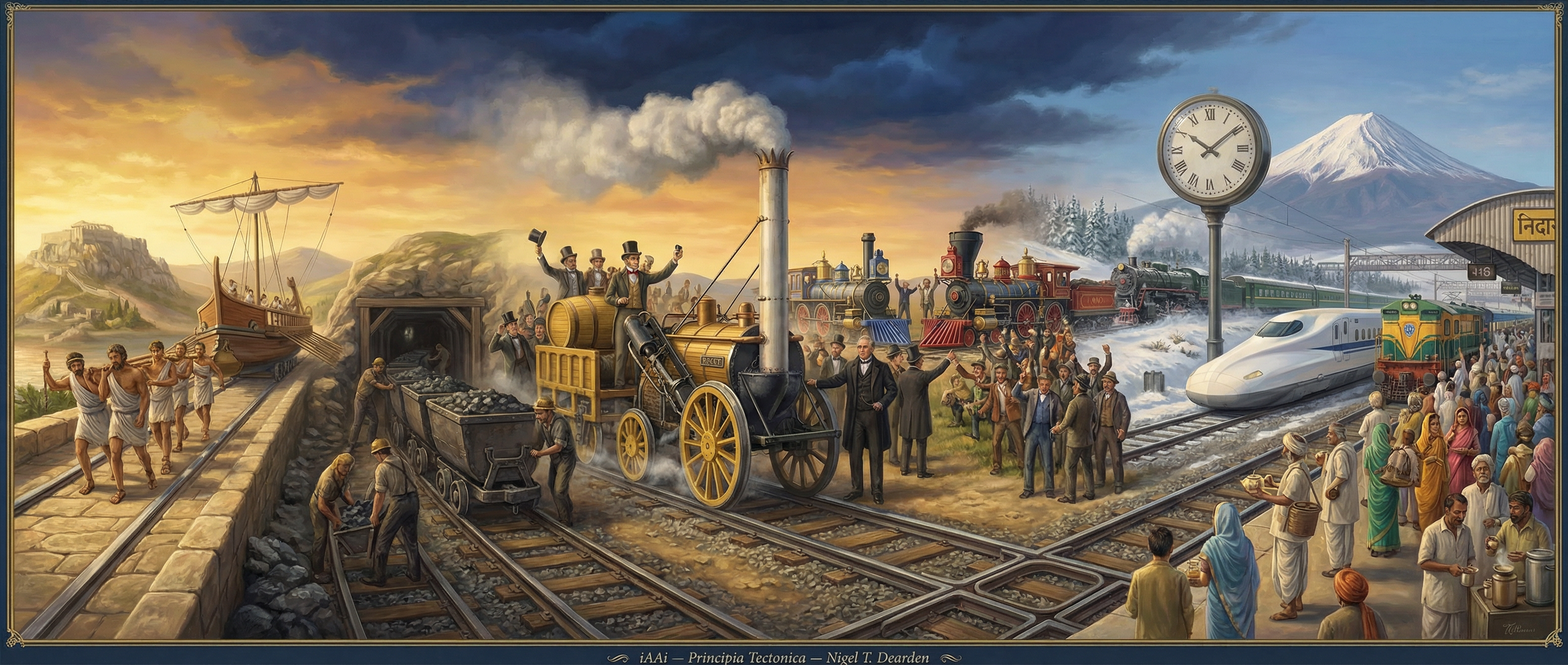
La Menara — The Cultural History of Rail Across Civilisations
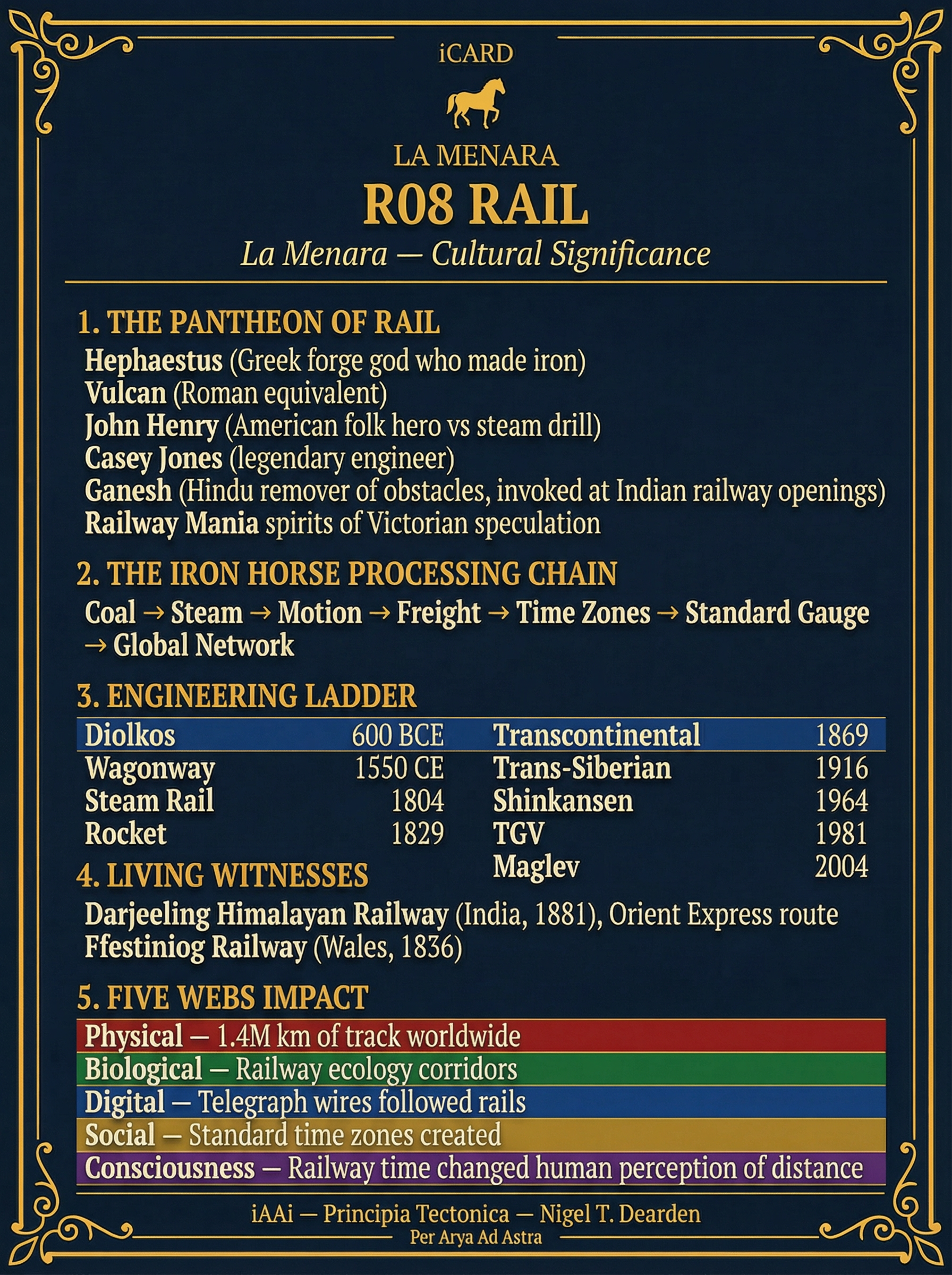
iCard R08 — Rail Cultural Significance
THE COUNTERPARTS: RAIL
How West, East, and Outrider each approached rail infrastructure

The Counterparts — Relay 07: Rail