

RELAY 11: ORBIT
Space — The Narrator
From digital networks came the leap beyond Earth. Rockets pierced the sky, satellites orbited the planet, and telescopes gazed into the cosmos. Orbital stations circled as new cathedrals, networks of satellites became the nervous system of civilisation, and humanity saw itself from above — a single planet suspended in darkness. Yet space carried risks: militarization, neglect of Earth, and the temptation to escape rather than steward. Infrastructure transcended terrestrial limits, but consciousness had to expand with it. In this relay, mankind learned that orbital perspective is not escape, but responsibility — the recognition that Earth itself is the first spacecraft.
ACTIVE WEBS
KNOWLEDGE WEB
Education and information systems
CONSCIOUSNESS WEB
Shared understanding and cultural transmission
EXCHANGE WEB
Knowledge markets and intellectual exchange
POWER WEB
Control of information and educational access
ICUT FOUR PILLARS
INFRASTRUCTURE
Schools, universities, libraries, media systems, internet
CONTINUITY
Knowledge preservation and educational traditions
UNIFICATION
Shared culture and collective consciousness
THREATS
Misinformation, knowledge loss, educational inequality
HISTORICAL SIGNIFICANCE
Timeline: Approximately 3,000 years ago with writing systems, accelerating with printing press (1440) and mass education (1800s onwards).
Impact: Enabled knowledge accumulation, facilitated cultural transmission, and created the foundation for scientific and technological progress. Human infrastructure determines civilisational capability.
Legacy: Digital learning, artificial intelligence tutoring, and global knowledge networks represent the next evolution of human infrastructure. The quality of human development will determine future civilisational success.
LA MENARA — THE REMARKABLE ORBIT
Satellites · Space Stations · Planetary Infrastructure — Cultural Significance Across the Five Webs
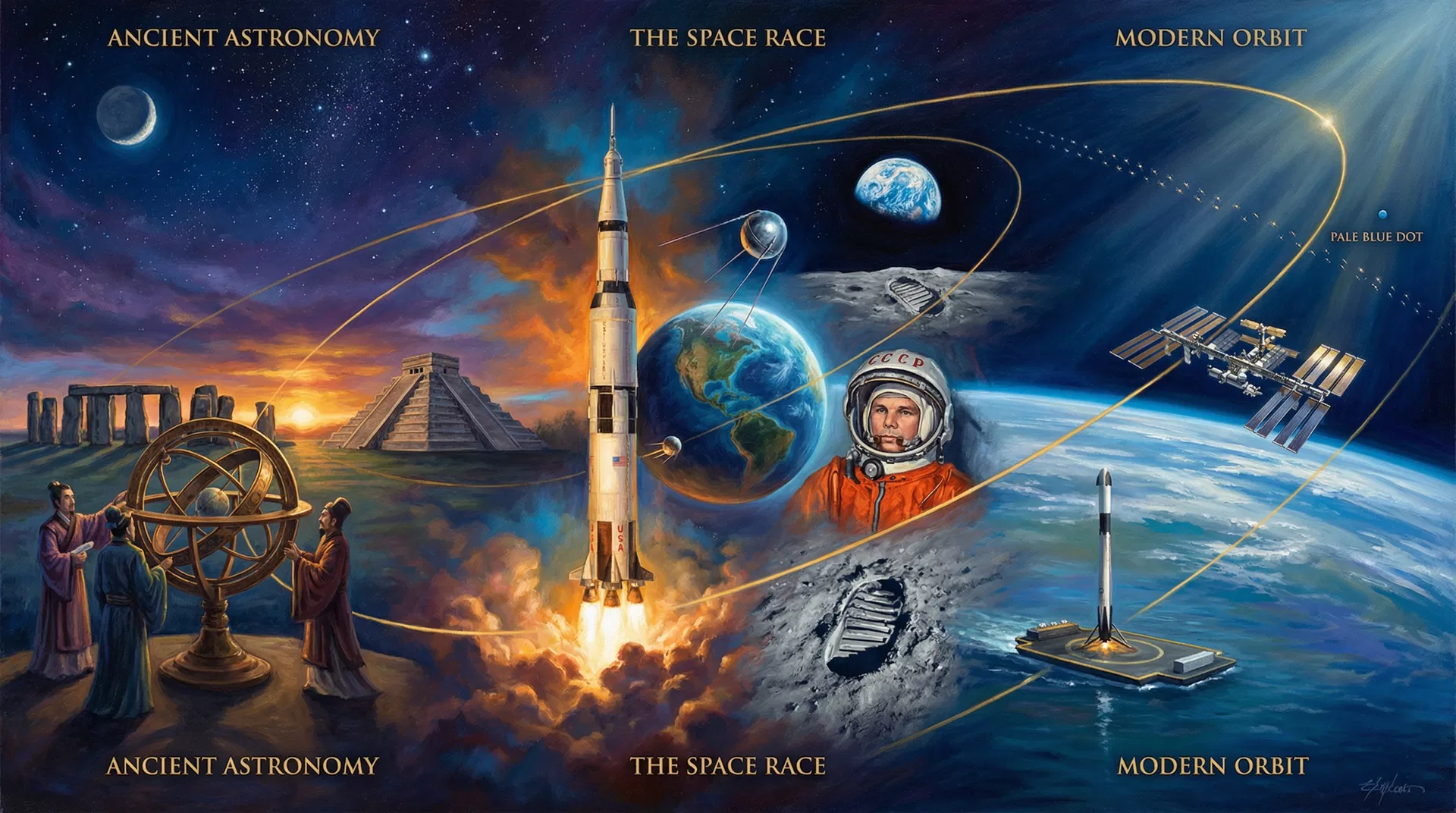
La Menara — The Cultural History of Orbit: From Ancient Astronomy to the ISS and Beyond
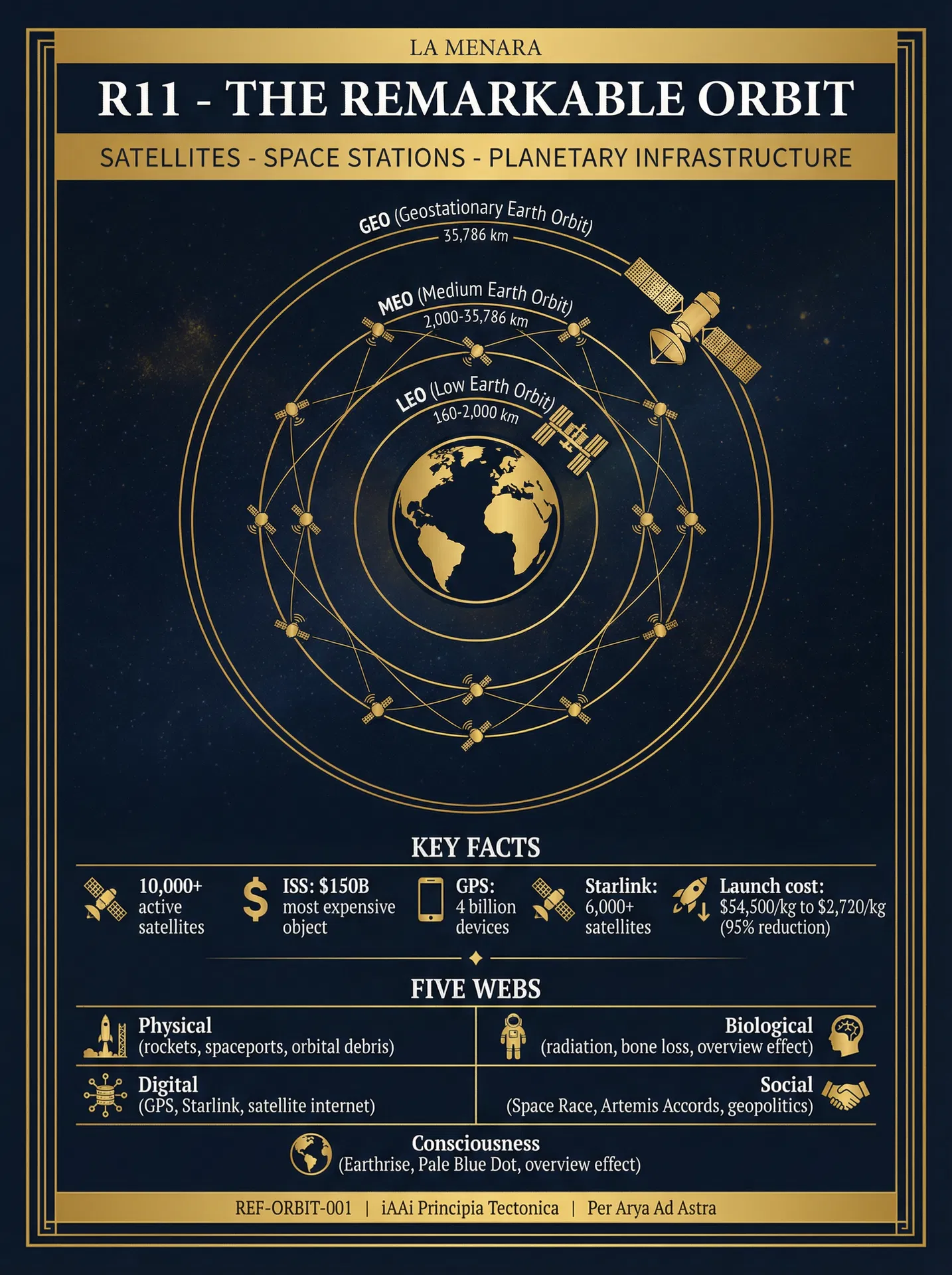
iCard R11 — Orbit Cultural Significance
THE COUNTERPARTS: HUMAN NODES
How West, East, and Outrider each approached human nodes infrastructure

The Counterparts — Relay 11: Orbit